
Your Wellness Stipend Probably Pays for Peloton, ClassPass, and Your Gym
Your employer's wellness stipend (LSA) likely covers Peloton, ClassPass, gym memberships, and Calm — if you spend it before year-end. Here's what an LSA actually pays for.

The quick answer
Your employer's wellness stipend (LSA) likely covers Peloton, ClassPass, gym memberships, and Calm — if you spend it before year-end. Here's what an LSA actually pays for.
How tax-free checkout works
- 1. Get your LMNAnswer a few questions. A licensed clinician reviews and signs, usually in minutes.
- 2. Shop anywhereThe extension flags eligible items and shows what you save on any retailer.
- 3. Pay with HSA/FSACheck out with your benefits card. Receipts are filed and audit-ready.
Paying with pre-tax dollars saves about 30% on an eligible purchase. How the letter works.
For years, I let most of a four-figure wellness stipend evaporate on December 31st because I never quite figured out what it covered. It covered almost everything I was already paying for out of pocket — the Peloton membership, the ClassPass credits I bought in a burst of January optimism, the Calm subscription I use every single night. I was quietly handing back free money in the one category I care about most.
If your employer offers a Lifestyle Spending Account (LSA), there's a strong chance it already covers your gym membership, your fitness app subscriptions like Peloton, your studio classes through ClassPass, and your meditation app — you just have to actually spend it before the year resets. Here's the catch worth knowing up front: an LSA is employer-funded and counts as taxable income, and every employer writes its own eligibility list. So the real move isn't “what's eligible everywhere” — it's “what's eligible in your plan,” and then using it.
The Caeli Spectrum: where fitness spending lands
Where each kind of fitness purchase falls across your benefit accounts in 2026. The lines matter, because putting the right purchase against the right account is the whole game.
🟢 Usually covered by your LSA (if your employer offers one)
The subscriptions and memberships below are the ones LSA administrators most commonly list as eligible. Full product entries with prices and links are further down.
- Gym & studio memberships — Equinox, Planet Fitness, your local spin or Pilates studio
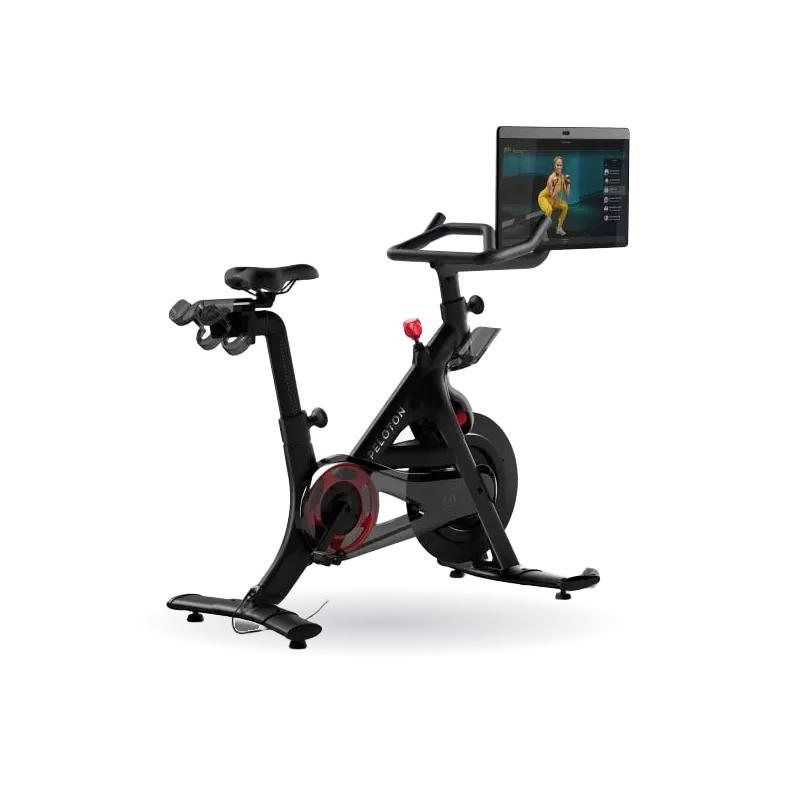
$2,695.00
- Class packages — ClassPass, yoga, spin, sports leagues
- Meditation & mental-wellness apps — Calm, Headspace
- Personal training — where the plan allows it
🟡 HSA-eligible — but only with a Letter of Medical Necessity
A gym membership or fitness program can be paid for with HSA (or FSA) funds, but it is not automatically eligible. It qualifies only when a licensed clinician documents it as treatment for a diagnosed condition — think cardiovascular disease, obesity, Type 2 diabetes — in a Letter of Medical Necessity (LMN), the doctor's note that reclassifies a wellness expense as a medical one. Without that paperwork, gym memberships are not an HSA expense.
🔴 Not the LSA's job
- General athleisure you'd wear anyway, supplements (different category), and anything your specific plan's guide doesn't list
TL;DR: Your LSA is the workhorse for fitness subscriptions and memberships; HSA dollars can cover a gym membership too, but only with a Letter of Medical Necessity tied to a diagnosed condition.
Wait — what's an LSA, and why didn't anyone tell me?
A Lifestyle Spending Account is an employer-funded pot of money — often around $500 to $1,500 a year — that you spend on wellness and lifestyle expenses your employer approves. Unlike an HSA or FSA, an LSA is fully funded by your employer and counts as taxable income, with no payroll deduction or deductible to clear. The reason no one told you is structural: LSAs are quiet, with no big open-enrollment moment, so the money just sits in a portal you log into twice a year — which is exactly how mine kept expiring. And you're not unusual for wanting to spend it on fitness: wellbeing and fitness is consistently the single largest category of LSA spend.
TL;DR: An LSA is employer-funded, taxable, and employer-defined — and fitness is the most-used category, so the odds your workout qualifies are good.
The picks: fitness subscriptions worth running through your LSA
Each of these is among the categories LSA administrators most commonly list as eligible. Prices are current as of 2026 and verified against each company's own pricing. As always, the membership or subscription is what reliably qualifies — confirm it appears on your plan's eligibility guide before you submit.
Peloton App — $12.99–$49.99/mo
The app-only tiers are the sleeper deal here — App One at $12.99/mo gets you strength, cardio, Pilates, yoga, and meditation on any device, no bike required, while App+ runs $28.99/mo and the All-Access membership for Peloton hardware owners is $49.99/mo. Multiple LSA administrators name Peloton directly as an eligible digital-fitness subscription. If your plan reimburses fitness apps, this is the cleanest dollar-for-dollar swap from your checking account to your stipend — well-documented eligibility, and an entry price low enough that almost any stipend covers a full year.
ClassPass — ~$19–$159/mo
ClassPass is the answer for people who don't want to commit to one studio. It's credit-based and tiered by market — commonly ~$49–$159/mo in major cities, with smaller starter plans around $19/mo (8 credits) and larger bundles up to $159/mo (80 credits), so check current local rates in-app. Benefits administrators list class packages and ClassPass-style memberships under the fitness category, and it's a natural fit for an LSA precisely because it bundles the boutique spin, yoga, and Pilates classes that would otherwise be à la carte. The draw is flexibility: one reimbursable line item that covers a dozen different studios.
Apple Fitness+ — $9.99/mo or $79.99/yr
If you already live in the Apple ecosystem and own a Watch, Fitness+ is the lowest-friction option on this list — workouts sync to your wrist and the annual plan works out to about $6.67/mo. It's $9.99/mo or $79.99/yr, shareable with up to five family members. It shows up under the fitness-app umbrella that LSA plans commonly reimburse, and the family-sharing angle makes the annual plan especially efficient if your household is on board.
Calm — $16.99/mo or $69.99/yr
Mental wellness is fitness too, and most LSA plans treat it that way — meditation and mindfulness apps like Calm sit under the mental-wellness category that administrators reimburse. It's $16.99/mo or $69.99/yr, with a family plan at $99.99/yr for up to six accounts. The annual plan (about $5.83/mo) is the value play if you actually use it nightly, which is the only way these apps earn their keep. This is the one I personally let auto-renew on a credit card for two years before realizing my stipend would cover it.
Headspace is the more structured, course-driven sibling to Calm — better if you want to be taught to meditate rather than handed a library. It's $12.99/mo or $69.99/yr. Same eligibility logic: it falls under the mental-wellness category LSAs commonly cover. At $69.99/yr it's priced almost identically to Calm, so the choice between them is about style, not money — and either way, your stipend can likely foot the bill.
Headspace — $12.99/mo or $69.99/yr
TL;DR: Peloton App and ClassPass are reliable LSA-eligible options; Apple Fitness+, Calm, and Headspace round out a year of fitness that your stipend can likely cover end to end.
What about the gym membership I actually go to?
Two clean paths in 2026. Your LSA is the simplest: gym and studio memberships (Equinox, Planet Fitness, your neighborhood Pilates spot) are routinely LSA-eligible — just submit the receipt, no doctor's note required. The HSA path also works, but only with paperwork: a gym membership becomes an HSA-eligible expense when a licensed clinician writes you a Letter of Medical Necessity tying it to a diagnosed condition like obesity, heart disease, or chronic pain. That's not a loophole — it's the long-standing IRS rule for turning a wellness expense into a medical one. Caeli builds the LMN consultation right into checkout — a chat-based clinician consultation in under 3 minutes, no doctor's visit required, with the LMN issued within 24 hours, and Caeli only fulfills the order once it's approved. Caeli also checks your specific plan's rules at checkout so you know which path actually applies to you before you pay.
TL;DR: Use your LSA for the gym if you have one — it's the no-paperwork route; HSA dollars can cover it too, but only with a Letter of Medical Necessity from a clinician.
The stack that gets you to “net-zero” wellness
Here's where the optimizer brain finally gets to play. The move isn't picking one account — it's stacking them so your wellness spending comes from employer-funded or pre-tax dollars instead of your checking account.
A realistic year for someone with a $1,200 LSA and an HSA:
- Studio membership + ClassPass → LSA (~$900)
- Calm or Headspace subscription → LSA (~$70)
- Peloton App → LSA (remaining balance)
- Gym membership or recovery tools that need a Letter of Medical Necessity → HSA, once a clinician has signed off
Done deliberately, the entire fitness layer of your life runs on money you'd otherwise forfeit or pay tax-inefficiently. That's the whole concept behind benefit stacking — combining accounts so one purchase pulls from the right source and nothing goes to waste.
More on the full mechanics in our guide to benefit stacking — [link to LH #6 — pending]. If you're also kitting out a home workout or office setup, the same logic extends to ergonomic and wellness gear — our home office guide walks through which pieces qualify and where — [link to LH #9 — pending].
TL;DR: Stack LSA for subscriptions and memberships, HSA for medically-necessary gym or recovery gear (with an LMN), and you can run most of your fitness life on dollars you'd otherwise lose.
Frequently Asked Questions
Are fitness app subscriptions like Peloton and Apple Fitness+ LSA-eligible in 2026?
In most LSA plans that include a fitness or physical-wellness category, yes. Major benefits administrators list online fitness subscriptions — Peloton, ClassPass, Apple Fitness+, Beachbody — as standard eligible expenses. Because LSAs are employer-defined, confirm your plan's eligibility guide before you submit.
Is a gym membership HSA-eligible in 2026, or only LSA-eligible?
Both paths exist, but they work differently. Gym memberships are a well-established LSA-eligible expense where your employer offers one, with no paperwork beyond a receipt. To use HSA funds for a gym membership, you need a Letter of Medical Necessity from a licensed clinician tying the membership to a diagnosed medical condition — there is no automatic HSA gym eligibility without it.
Can I use my LSA for a meditation app like Calm or Headspace?
Frequently, yes. Meditation and mindfulness apps such as Calm and Headspace are commonly listed under the mental-wellness category of LSA plans. As always, eligibility depends on your specific employer's approved list.
How much does a Peloton App membership cost in 2026?
Peloton App One is $12.99/mo and App+ is $28.99/mo; the All-Access membership for Peloton hardware owners is $49.99/mo. The app-only tiers don't require any Peloton equipment, which makes them the most stipend-friendly option.
Is LSA money taxed?
Yes. Unlike an HSA or FSA, an LSA is funded entirely by your employer and is treated as taxable income to you. You still come out ahead because it's money you wouldn't otherwise have — but it's not pre-tax, so don't confuse it with your HSA.
What happens to my wellness stipend if I don't use it by year-end?
In most plans, unused LSA funds are forfeited at the plan-year reset — there's no carryover guarantee. That's the single biggest source of wasted fitness benefit. Spend it deliberately through the year, or set a reminder before the reset date so it doesn't vanish.
Put it to Practice
Vetted brands & products
Recommendations we genuinely stand behind — vetted for quality and benefit eligibility.
Continue learning
All articles
Caeli Picks
Physical Therapy at Home: Foam Rollers, Resistance Gear, and Exercise Therapy Eligibility
Most of what a physical therapist asks you to do happens at home, between visits. The gear that makes it easier is modestly priced, and much of it can come out of your HSA or FSA. Here are the picks, what the IRS says about exercise as therapy, and how the LMN connects the two.

Benefits Basics
What's an LSA? The Free Money Benefit You're Probably Ignoring
Your employer might be handing you $500 to $2,000 a year for gym memberships, ergonomic gear, even pet care. It's called an LSA. Most people never use it.

Benefits Basics
FSA eligible vs FSA approved: what's the difference?
Eligible means the IRS allows the expense. Approved means your plan administrator accepted your claim. Here's the difference, and how to get reimbursed cleanly the first time.