
The Human Advantage Series | Closing the Benefits Utilization Gap
Joe Militello, Chief People Officer at Mechanical Orchard, on why 60% of employee benefits go unused, and why removing friction, not adding perks, closes the gap.

This is a recap of Episode 4 of The Human Advantage, Caeli's interview series on the future of work and building organizations that genuinely support people.
Benefits make up close to 30% of a total compensation package. By most estimates, less than half of that ever actually gets used. That's the benefits utilization problem: companies fund real value for their people, and most of it goes unclaimed, not because employees don't want it, but because nobody made it easy to find.
In episode 4 of The Human Advantage series, I sat down with Joe Militello, Chief People Officer at Mechanical Orchard, who has been closing that gap for over 25 years at companies like EMC, Pivotal, and PagerDuty. He calls it the last mile problem, and once you hear him explain it, you can't really unsee it.
The last mile problem
"Companies buy great benefits," Joe told me. "They invest in their employees, they care about their employees, but then we make the employee responsible for figuring out how to use them."
That's the whole gap, in one sentence. It's not that companies are cheap, and it's not that employees don't care about their own compensation. It's that the system hands people a benefit and then walks away. Most of the communication budget goes toward open enrollment, a few weeks a year when employees are flooded with information about plans they haven't used yet and won't need for months. Then the rest of the year happens, and the support disappears right when people actually need it.
"There's so much time and attention focused on open enrollment," Joe said. "But then throughout the year, how are we making it easy for employees to engage with the benefits at the time that they need it?"
That's the exact gap Caeli sits in. Instead of an employee needing to remember what they signed up for months ago, Caeli checks eligibility in real time, at the moment someone's actually shopping or paying, so the last mile Joe's describing never has to be walked alone.
Meeting employees where they already are
Joe's answer isn't more training. It's not another all-hands presentation or another PDF nobody opens. It's meeting people at the moment the question actually comes up.
"If an employee is even just starting to have symptoms of something, either for themselves or for their dependent, and they're just curious, the people team should be thinking: how can technology just make it very easy to engage with them? Like, hey, were you aware that you have this benefit?"
That's a genuinely different posture for HR to take. Instead of asking employees to remember a training session from months ago, or dig through an old open enrollment packet, the benefit shows up exactly when it's relevant. Joe put it simply: "The future of HR technology should be less about asking employees to go visit another website or another system, and about bringing more intelligence to them in the flow of their work and their life."
Removing friction beats adding perks
When I asked Joe what he watches for beyond engagement survey scores, his answer surprised me. It wasn't a metric. It was a habit.
"Engagement often improves when you stop adding things and you start removing friction," he said. His advice for any people leader: ask employees what's actually getting in the way of doing great work, and remove that one thing.
He told me about a leadership team he'd been advising, where 15 executives spent an entire hour in a room planning out a full year of events. Afterward, half of them said they shouldn't have been in that room at all. One person could have owned the task and reported back. The other 14 people lost an hour that never shows up on an engagement survey, but adds up all the same.
"Usually friction shows up in terms of a misuse of time," Joe said. "You're not being efficient with your time." He was careful to note that leaders often don't feel this friction themselves, simply because of where they sit in the organization. Employees navigating three different portals to understand an FSA benefit feel it constantly.
Happy at work versus happy doing the work
The distinction Joe returned to more than once was small, but it reframes the whole conversation: the goal isn't employees who are happy at work. It's employees who are happy doing the work.
"There's a subtleness there," he said. "I want them happy doing the work. That means they have clarity on their role, they feel supported, they know how to get their job done."
It's a useful test for any benefit, program, or perk a people team is considering. Does it make the actual work easier, or does it just make the workplace feel nicer? Joe's read is that only one of those actually moves engagement.
What this means for HR and benefits teams
None of this is a knock on HR. If anything, it's a case for giving people teams better tools instead of more to manage manually. Joe's advice for supporting the people who support everyone else: start with the business outcome you're actually trying to drive, then bring in technology to make that outcome easier to hit.
This is the same benefits utilization problem Caeli was built to solve. Benefits shouldn't require a scavenger hunt across a benefits portal, a merchant site, and an old open enrollment email just to find out if something's covered. Caeli checks eligibility, surfaces what's already available, and handles Letters of Medical Necessity, right in the flow of work, so the last mile Joe described gets a lot shorter. See the full breakdown of how it works on Caeli's features page.
Caeli Pro-Tip: Joe's advice was to remove friction, not add another program. That's exactly what Caeli's browser extension does at the point of purchase: it checks a specific plan's eligibility rules automatically, so employees never have to guess whether something is covered or dig through a benefits portal to find out. Explore the full feature set, or install Caeli and see it for yourself.
Thank you to Joe Militello for such a generous conversation. Watch the full episode of The Human Advantage, and connect with Joe on LinkedIn to keep the conversation going.
Put it to Practice
Vetted brands & products
Recommendations we genuinely stand behind — vetted for quality and benefit eligibility.
Continue learning
All articles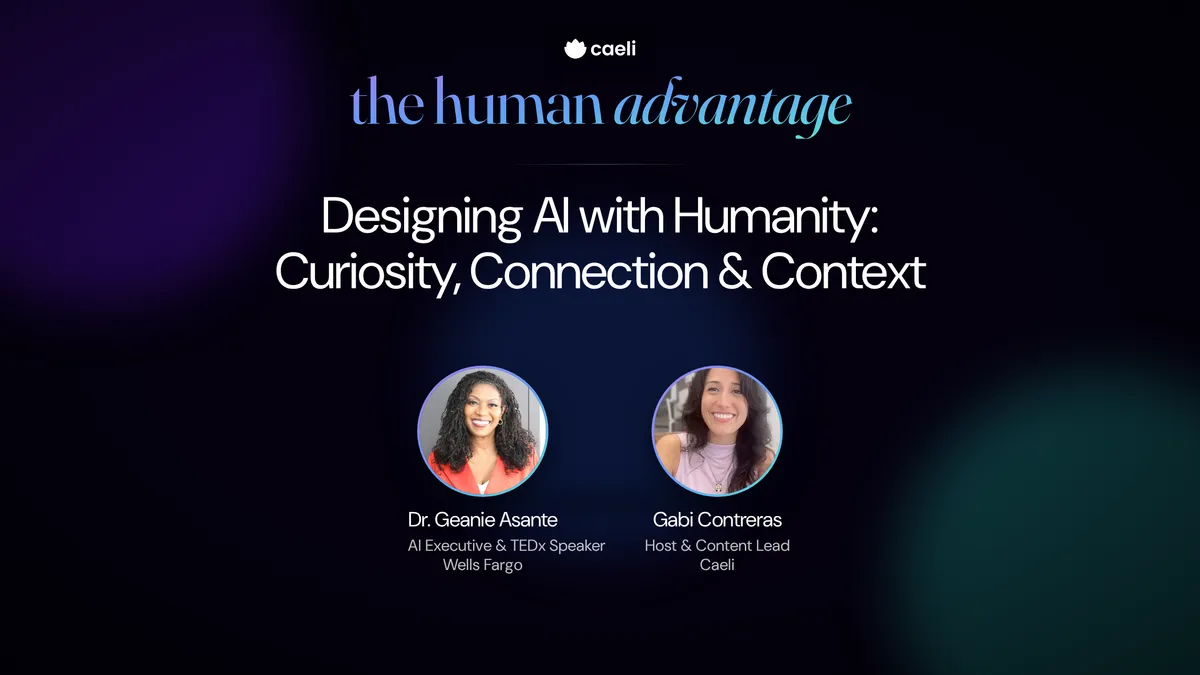
Benefits Maxxing
The Human Advantage Series | Designing AI with Curiosity, Connection & Context
An AI executive and TEDx speaker on the three C's of human-centered design, why technology alone can't create a caring culture, and letting AI handle the chase while humans own the choice.

Benefits Basics
10 Surprising Things Your HSA or FSA Will Actually Pay For (2026)
You probably know your HSA covers prescriptions. But you can also use it for sunscreen, an Oura Ring, a Theragun — sometimes even a Peloton. Here's the surprising list.
Benefits Maxxing
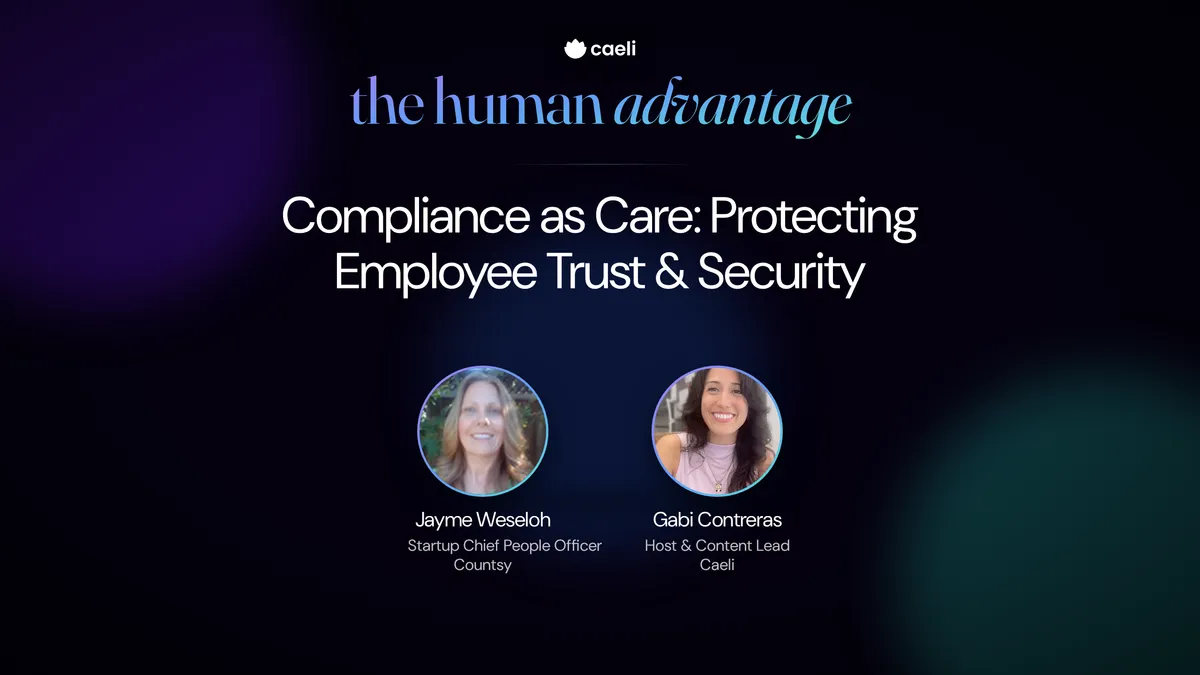
The Human Advantage Series | Compliance as Care: Protecting Employee Trust & Security
A conversation with Chief People Officer Jayme Weseloh on why protecting employee privacy is paramount, and how maximizing benefit utilization drives trust of everyone involved.