Open Enrollment Before Pregnancy: A Benefits Expert's Checklist for the Year Ahead (2027)
Planning a baby? Short-term disability, hospital plans and your out-of-pocket max all need to be set at the open enrollment before you're pregnant.

Most of us spend more time researching strollers than the health plan we'll give birth on. And by the time a pregnancy test comes back positive, it's usually too late to change that plan.
Here's the fast answer: if you might get pregnant in the next year, make your changes at this open enrollment, not after a positive test. Pregnancy usually doesn't let you change benefits mid-year, many short-term disability and hospital plans won't pay for a pregnancy that started before you enrolled, and in a year with a birth, the out-of-pocket max matters more than the deductible.
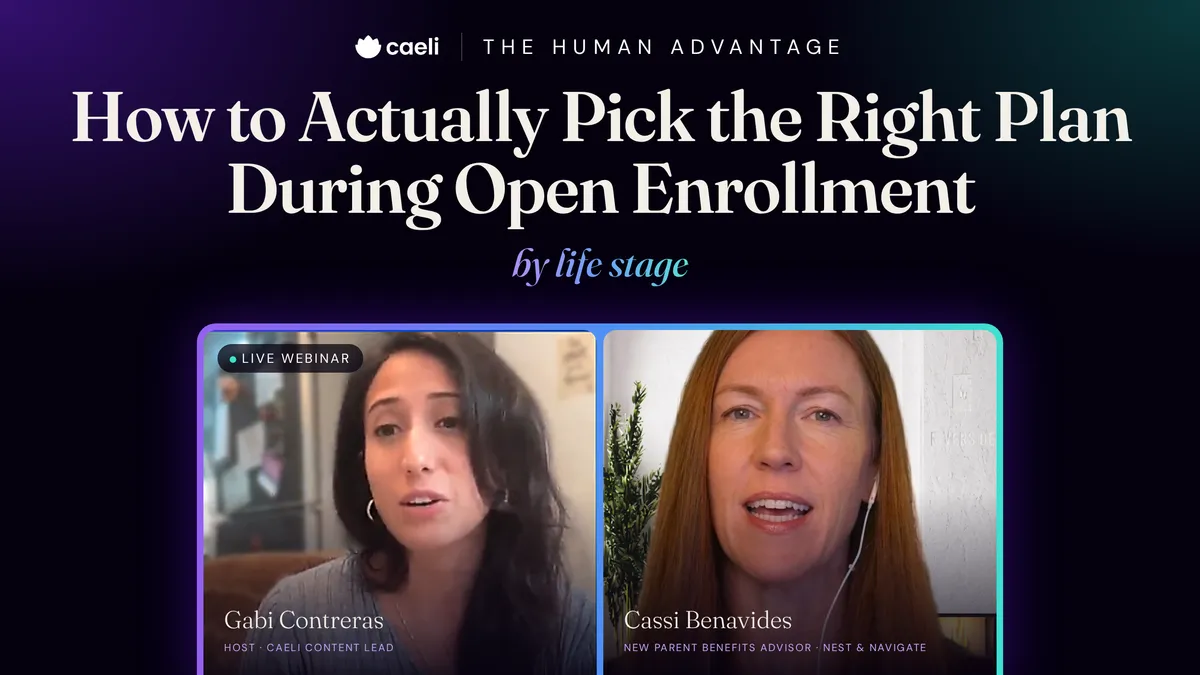
To find out what to set up, we sat down with Cassi Benavides, founder of Nest & Navigate, where she gives new families white-glove, one-on-one guidance as their personal benefits advisor. Cassi has spent 13 years in HR and benefits management, and she learned this lesson firsthand: as a benefits manager planning for her own son, she almost picked a plan that would have cost her $3,000 more for his birth. Prefer to watch? Here's Cassi's before-pregnancy breakdown, or catch the full conversation on YouTube.
Your 30-second cheat sheet: benefits to set up before pregnancy
Sign up now
- Short-term disability: many plans exclude a pregnancy that started before your coverage did.
- Hospital indemnity: pays you cash for a hospital stay, and some plans have waiting periods for childbirth.
- An HSA or FSA election sized to cover a birth bill.
Compare carefully
- Out-of-pocket max: the most you'll pay for covered care in a year, and a birth will likely get you there.
- Where you want to give birth: hospital, birth center or home.
- Fertility coverage: check your employer's benefit and your state's rules.
TL;DR: If a baby could arrive in the next 18 months, this open enrollment is the one that counts.
Why can't you just change your benefits when you find out you're pregnant?
Because pregnancy isn't on the list. Mid-year changes to employer health coverage are tied to special enrollment events like marriage, birth and adoption. The birth itself opens a window. The pregnancy doesn't.
"A lot of people think you can change your benefits when you get pregnant. No, you cannot."
That means the plan you pick this fall is the plan you'll likely give birth on.
TL;DR: The birth opens a mid-year window, but the pregnancy doesn't, so set up coverage at the open enrollment before.
Should you sign up for short-term disability a year ahead?
If your state doesn't already provide disability pay, Cassi's answer is yes. Voluntary short-term disability plans often carry pre-existing condition rules. Penn State's plan is a typical example: if you're already pregnant when coverage starts, benefits aren't payable for that pregnancy, and the exclusion applies to disabilities that begin in the first 12 months. Every plan is different, so read yours, but the pattern is why Cassi says to enroll at least a year before you plan to get pregnant.
A few states run their own disability or paid family leave programs. Cassi lives in California, so she had to factor in how the state program and her employer's plan work together. If you're in one of those states, check both before you buy extra coverage.
Cassi also admits her own short-term disability plan tripped her up. She was managing the benefit at her company and still misread how it paid out, so her leave budget was wrong. Ask HR for the exact percentage of pay, the waiting period before payments start and the maximum number of weeks.
TL;DR: Enroll in short-term disability about a year before you try to conceive, and confirm how your plan and any state program pay out.
Is hospital indemnity insurance worth it for a birth?
It can be. Hospital indemnity plans pay cash directly to you when you're admitted, and you can spend it on anything, from medical bills to extra help at home. Some plans have a waiting period before they'll pay for a childbirth stay, which is another reason to buy before you're pregnant.
Cassi had never bought one before her son. Her plan paid $1,500 for a two-night stay, more than she'd paid in premiums. Do the same math with your plan's monthly cost and its payout per admission.
TL;DR: A hospital plan can pay more than it costs in a birth year, but only if you enroll before any waiting period kicks in.
Why does the out-of-pocket max matter more than the deductible?
Your deductible is what you pay before insurance starts sharing costs. Your out-of-pocket maximum is the most you'll pay for covered care in the whole year. In a normal year, the deductible is the number you feel. In a year with a birth, you'll very likely hit the cap.
"When you're planning for a huge medical event, the deductible kind of doesn't matter anymore."
So compare plans by adding a year of premiums to each one's out-of-pocket max. A plan with a higher deductible but a lower cap can come out cheaper in a birth year.
TL;DR: In a birth year, judge plans by premiums plus the out-of-pocket max, not by the deductible.
Does your health plan cover the birth you want?
Start with where you want to give birth, then work backward. Most births happen in hospitals, but birth centers and home births are growing. Cassi has seen birth centers accept some PPO plans, while home births usually aren't covered. Call the provider and ask which plans they take before you enroll.
Fertility treatment works the same way. Coverage mostly depends on your employer. In California, a new law requires fully insured large group plans issued or renewed on or after January 1, 2026 to cover IVF, up to three completed egg retrievals. Coverage isn't 100%, so call your insurer for the details.
TL;DR: Confirm your birth center, OB and fertility clinic take the plan before you pick it.
How should you pay for the birth?
Even on the best plan, Cassi says to expect a bill in the thousands. Her advice is to set money aside pre-tax.
- HSA: available only with a qualifying high-deductible plan. For 2027 you can contribute up to $4,500 for self-only or $9,000 for family coverage, and the money never expires.
- FSA: available with most other plans, but it's use-it-or-lose-it. If your plan allows carryover, up to $680 of 2026 funds can roll into 2027. Think about what happens if your deadline arrives before the baby does.
Cassi's other mistake: she didn't realize how many baby-prep items her HSA covered, so she paid after-tax for first aid kits and more. Caeli flags eligible items on Amazon, Target and CVS before you pay, and at checkout, eligible items go on your FSA or HSA card while everything else lands on your backup card. Our new parent benefits checklist covers what qualifies.
TL;DR: Pre-fund the birth in an HSA or FSA, and spend those dollars on eligible baby prep instead of paying after-tax.
Caeli Pro-Tip: Setting aside FSA money for a birth that might land after your plan's deadline? Install Caeli and every eligible purchase on Amazon, Target and CVS gets flagged before you pay, so you can spend down the balance on things you'll actually need, from thermometers to first aid kits. Itemized receipts are saved and paired with any LMN in one record. Install Caeli before your 2027 elections start.
Frequently asked questions
Can I sign up for short-term disability if I'm already pregnant?
You can often enroll, but many voluntary plans won't pay for a pregnancy that started before coverage began. Penn State's plan, for example, excludes a pregnancy already underway at enrollment.
How far in advance should I enroll in short-term disability before getting pregnant?
Cassi recommends at least a year. Many plans exclude pre-existing conditions for the first 12 months of coverage.
Does hospital indemnity insurance cover childbirth in 2027?
Many plans do, paying cash per admission or per day, but some have a waiting period for childbirth stays. Check your plan's waiting period before you enroll.
Is a high-deductible plan bad if I'm planning a pregnancy?
Not necessarily. Compare premiums plus the out-of-pocket max. A high-deductible plan with an HSA and a lower cap can cost less in a birth year.
Does California require insurance to cover IVF in 2026?
For fully insured large group plans issued or renewed on or after January 1, 2026, yes, up to three completed egg retrievals. Self-funded employer plans may not be required to follow it.
Can I use my FSA for baby supplies before the baby is born?
Many health items qualify, like thermometers and first aid supplies. Check each item's eligibility, and spend before your plan's deadline.
The bottom line
The open enrollment before a baby is the one that sets you up. Enroll in disability and hospital coverage early, pick your medical plan by its out-of-pocket max, and start saving pre-tax. If you want help running your own numbers, book a free consultation with Cassi. For the rest of the life stages, read our full guide to choosing a health plan for your life stage.
This article is for education only and isn't tax, legal or financial advice. Plan rules vary by employer and state.